
How AI decides which local business to recommend
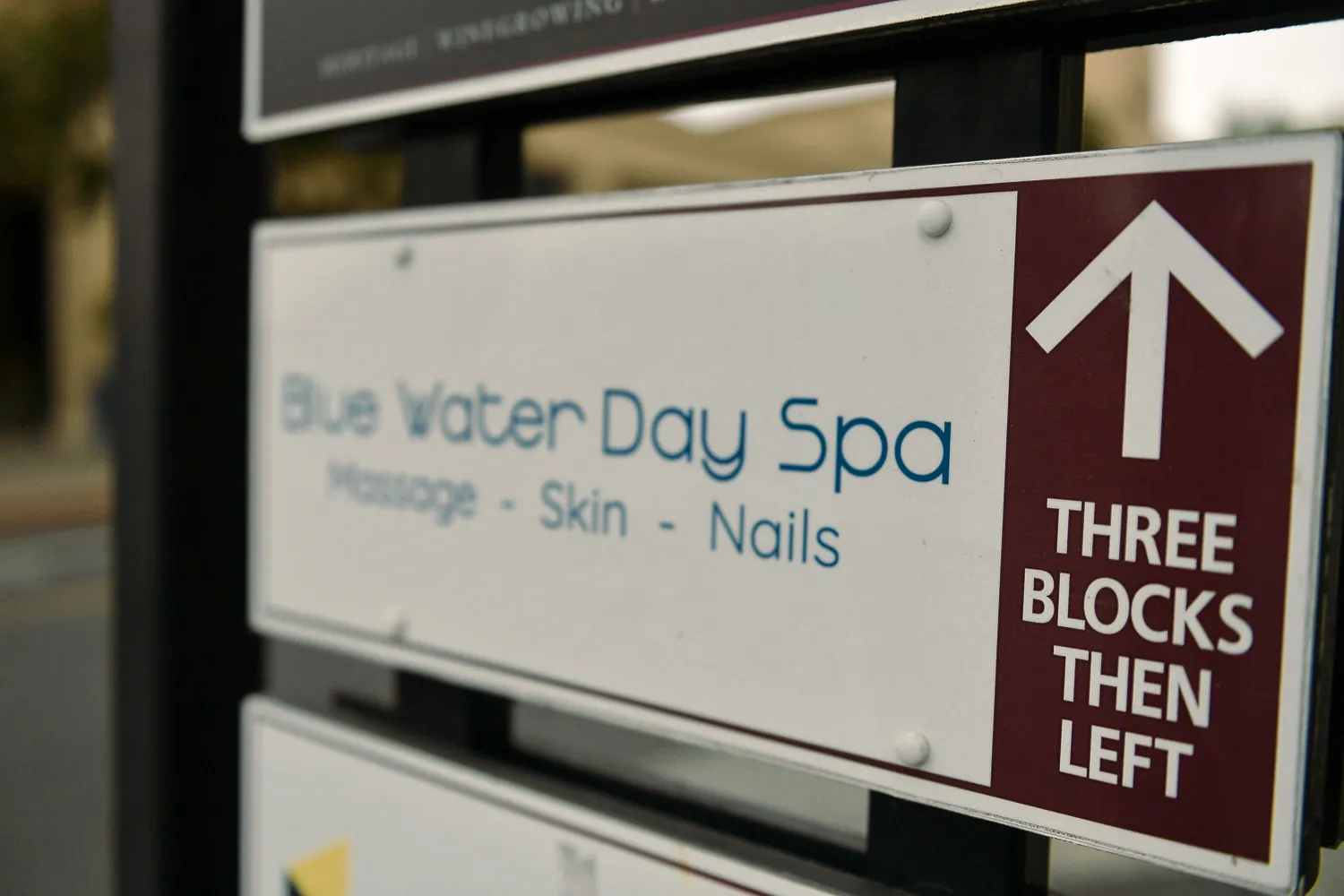
An assistant does not look your business up in a directory and read it back. It assembles an answer from whatever it can find about every candidate business, then names the ones it can describe most confidently. Where the record is thin it names someone else, not because that business is better, but because it is easier to describe.
What actually happens when someone asks
A person types best med spa near Campbell into ChatGPT, or asks which chiropractor in Napa takes their insurance. What comes back looks like a recommendation. It is closer to a summary.
The assistant runs a search, pulls back a set of pages, and writes an answer out of what those pages say. You can see the machinery from the outside if you look at the crawlers. OpenAI documents a separate user-agent for exactly this job: OAI-SearchBot, which “is used to surface websites in search results in ChatGPT’s search features,” kept distinct from GPTBot, which crawls material that may train the underlying model. Live retrieval and prior training are two different pipes, and most products draw on both.
The details differ by product and they change every few months. What does not change is the shape of it: the AI assistant is writing a description of your business from sources it did not ask you to approve. Your website is one of those sources. It is rarely the only one, and on questions about hours, location, price or reputation it is often not the decisive one.
Why a thin record loses to a thick one
Assistants are built to avoid saying things they cannot support. That single design goal explains most of what you see in the results.
If a model can find your name, your city, what you do, what it costs roughly, when you are open, and what people said afterwards, it can write two confident sentences about you. If it can find a name and a phone number, it can write half a sentence. Half a sentence loses to two confident ones every time.
This is the part owners find hardest to accept, so it is worth saying plainly: the business that gets named is not always the better business. It is the better-described one. A twenty-year practice with a thin online record will lose a recommendation to a two-year competitor who published their services, their hours and their prices as text.
What counts as the record
The record is everything a machine can read about you without your permission. In rough order of how often it decides an answer:
Your own site, if it is legible. Services named as text, not baked into a banner image. Prices as text where you publish them. Hours, address and service area stated once and stated the same way. Structured data that says this is a business, here is its name, here is what it offers in a format nothing has to guess at.
Third-party listings. Directories, maps profiles, professional associations, chambers, booking platforms. These matter less for what they say about your quality than for what they confirm. Two sources agreeing is worth far more than one source asserting.
Anything written about you elsewhere. Press, a supplier’s case study, a partner’s site, a forum thread. Independent mentions are the strongest item on this list because they are the hardest to manufacture, and this is not a matter of opinion. Google, describing how local results are ranked, says prominence is based partly on “how many websites link to your business,” and that “businesses with complete and accurate info are more likely to show up in local search results.”
Reviews, and here it is worth being exact rather than repeating the usual line. Google documents volume and rating as the ranking input: “more reviews and positive ratings can help your business’s local ranking.” Not the wording. The wording earns its place for a different reason. When a system is describing you rather than ordering a list, review text is the only source in which a specific treatment, a named staff member, or an actual outcome appears in someone else’s words. Stars can be averaged. They cannot be quoted.
Why disagreement is worse than silence
If your hours say one thing on your site and another on a maps listing, an AI assistant does not average them and it does not pick the newer one. It usually does the safe thing. It declines to state your hours at all, or it drops you in favour of a business whose sources agree.
Silence about a detail costs you that detail. Disagreement about a detail can cost you the whole recommendation, because it makes every other fact about you less trustworthy by association. It is also, for most businesses, the cheapest thing on this page to put right: it needs an afternoon and a list, not a rebuild.
What this means for a business owner
Three things follow, and none of them are about writing more blog posts.
Publish the boring facts as text. Services, service area, hours, what you charge if you charge publicly. Not in an image, not in a PDF, not only in a booking widget that loads after the page does.
Make your sources agree. One name, one address format, one phone number, one description of what you do, everywhere it appears. This is unglamorous and it is the highest-yield work available.
Give the model something to quote. A clear answer to a real question, written as text on a page you control, is what gets lifted into an answer with your name attached to it.
None of this guarantees placement. Nobody can promise that, and any agency that does is selling a result it has no mechanism to deliver. What it does is remove the reasons you are being skipped, which is the whole of what AI Visibility Strategy is.
Questions people ask
Does my website still matter if AI answers the question?
More than before, but differently. Your site is where an AI assistant confirms what other sources claim, and it is the only source you fully control. It has to be legible to a machine as well as readable by a person.
Is this the same as SEO?
It overlaps and it is not the same. Classic SEO competes for a position in a list of links. This competes to be named inside a written answer, where there is no second page and often only three names. The technical hygiene is shared; the goal is not.
How long does it take to show up in AI answers?
There is no honest number. Assistants refresh what they know on their own schedules, and some rely partly on training data that is months old. Fixing the record is the part you control; when it is picked up is not.
Can I pay to appear in AI recommendations?
You can now buy space in ChatGPT. You cannot buy the answer. OpenAI began testing ads in February 2026 and has expanded the pilot well beyond the US since, and it is explicit about the wall between the two: “ads do not influence the answers ChatGPT gives you,” and “when you see an ad, they are always clearly labeled as sponsored and visually separated from the organic answer.”
Two further limits matter for the businesses this article is about. Ads run only on the Free and Go tiers. And OpenAI states that “ads are not eligible to appear near sensitive or regulated topics like health, mental health or politics.” For a med spa or a chiropractor the paid slot is not simply separate from the recommendation, it is largely not on offer. Being described well is not the cheaper route to that answer. It is the only one.
Reptify Media · Journal
https://reptifymedia.com/journal/how-ai-decides-which-business-to-recommend.html
Published